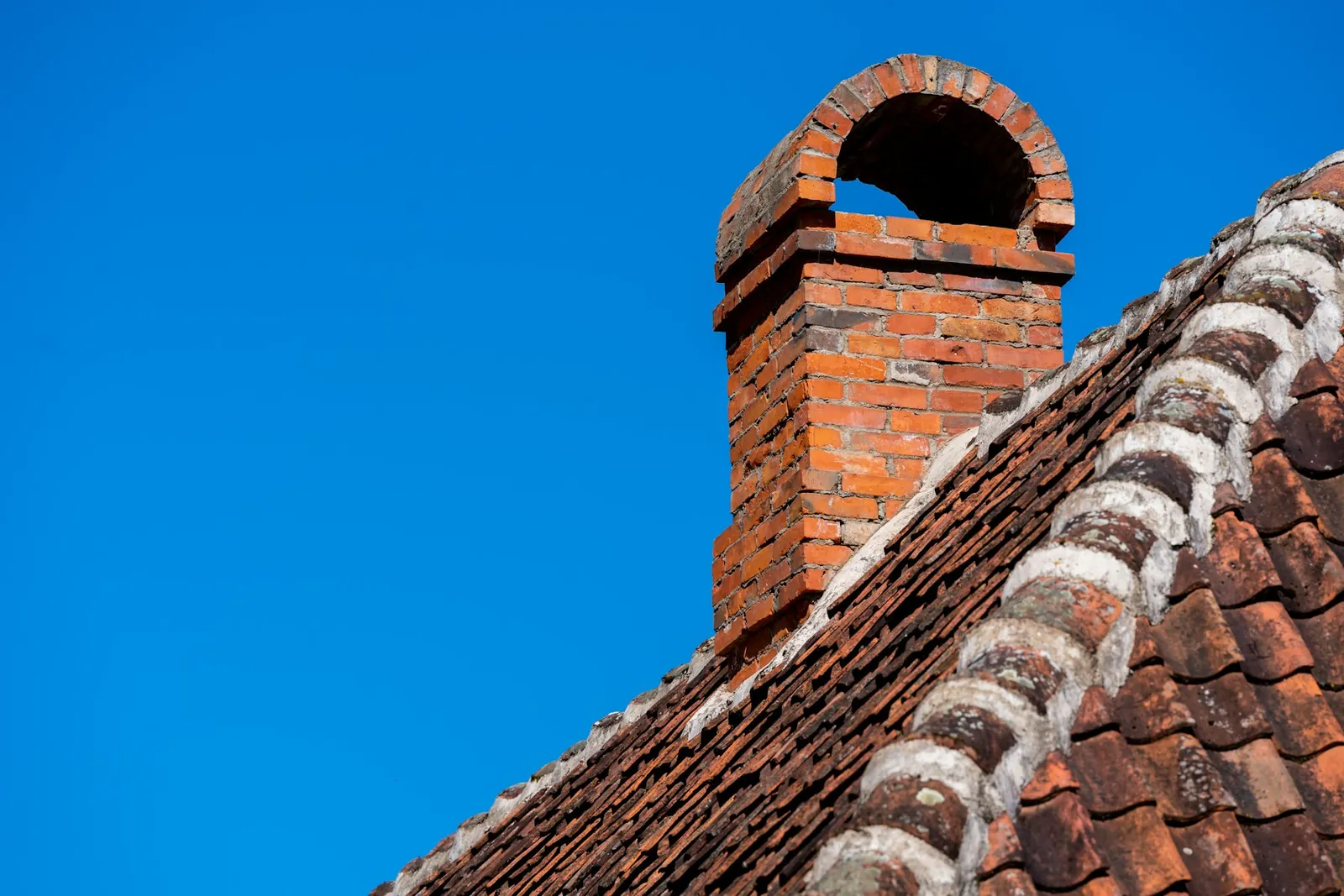
Chimney Liners Sized for What Burns Below
A cracked, missing or wrong-size flue is the most common chimney problem we find. A stainless liner installed typically costs $1,500 to $5,000 in New Jersey.
A flue liner keeps heat, smoke and combustion gases inside a sealed channel instead of against the brick and the wood framing around it. New Jersey has a lot of chimneys that were built before anyone thought about that: the Census counts about 17 percent of the state's homes as built before 1940, and in towns like Montclair and Maplewood it is more than half. Many of those flues are bare brick or clay tile that has cracked after a century of heating seasons.
The state fire code is direct about it. A DCA guide to the New Jersey edition says masonry chimneys found without a flue liner, with open mortar joints that would let smoke or gases into the building, or so cracked as to be dangerous, shall be repaired or relined with a listed liner system. Our job is to find out which of those you have and fix it once.
Signs you need this
- Pieces of clay tile in the fireplace or the cleanout
- A camera or flashlight shows gaps between tiles
- Smoke smell in rooms next to the chimney
- Water stains or white residue at the furnace connector
- A new furnace, boiler or water heater is on the way
How we do it
- Inspect and photographThe free inspection looks at the flue from the top and bottom. If we suspect a hidden crack, a camera scan is priced at the inspection before we run it.
- Size the linerWe match the liner diameter and material to the appliance it will serve: a wood stove, an open fireplace, a gas furnace or an oil boiler all need different things.
- Install from the topThe liner is lowered down the flue, connected at the bottom, insulated where the manufacturer calls for it and sealed under a new top plate and cap.
- Paperwork for your townYou get the liner's make, model, listing, material and size in writing, which is what the town asks for with a permit application.
Stainless, aluminum or cast-in-place: which do I need?
Stainless steel is the standard for wood stoves, inserts, oil and most gas appliances. Installed stainless costs $1,500 to $5,000, depending on height, diameter and whether it needs insulation. Aluminum is only used for certain gas appliances, which is why a furnace or water heater liner can be much less, typically $625 to $2,250.
Cast-in-place relining pours a cement-like material around a form inside the flue. It suits old chimneys with irregular or offset flues, and typically runs $2,000 to $7,000.
Does relining need a permit in New Jersey?
It depends on the type. The state's ordinary maintenance rule, N.J.A.C. 5:23-2.7, lists applying a liquid lining material inside an existing chimney as maintenance, so coating-type relines often need no permit. A stainless liner serving a new or changed appliance generally goes through your town's construction office.
When a liner is installed alongside fuel-fired equipment, the state's F-370 chimney verification form says all the liner documentation must go with the permit application. We provide it.
Why do oil and gas flues need liners so often?
Old boiler flues were sized for big oil burners. A modern gas appliance sends cooler, wetter exhaust up the same flue. The gases cool before they reach the top, water condenses on the masonry, and the mildly acidic condensate eats tile and mortar. A liner sized to the new appliance keeps the gases warm enough to draft and rise.
FAQ
Chimney Liners & Relining questions
How much does a chimney liner cost in New Jersey?
A stainless liner typically costs $1,500 to $5,000 installed, a liner for a gas furnace or water heater $625 to $2,250, and cast-in-place relining $2,000 to $7,000. Your price is written down at the free inspection.
Can I keep using a fireplace with cracked flue tiles?
We would not. Cracks let heat and gases reach the brick and framing behind the tile. The New Jersey fire code treats an unlined or badly cracked chimney as something to repair or reline.
What is the life span of a stainless liner?
That depends on the appliance, the fuel and how the chimney is maintained. Wood and oil both leave deposits that need regular attention. We check the liner at every free inspection.
Do you install liners for oil-to-gas conversions?
Yes. That is one of the most common jobs in New Jersey. See our F-370 chimney check page for how the conversion, the form and the liner fit together.
Is a liner the same as a chimney cap?
No. The liner runs the full height of the flue on the inside. The cap sits on top and keeps rain, animals and debris out. Most liner installs end with a new cap.
Related
Liners, caps, dampers and fireboxes
Book online
Pick a day. We'll bring a ladder.
Free inspection in a 3-hour window: 8 to 11, 11 to 2, or 2 to 5. We call to confirm before we arrive.