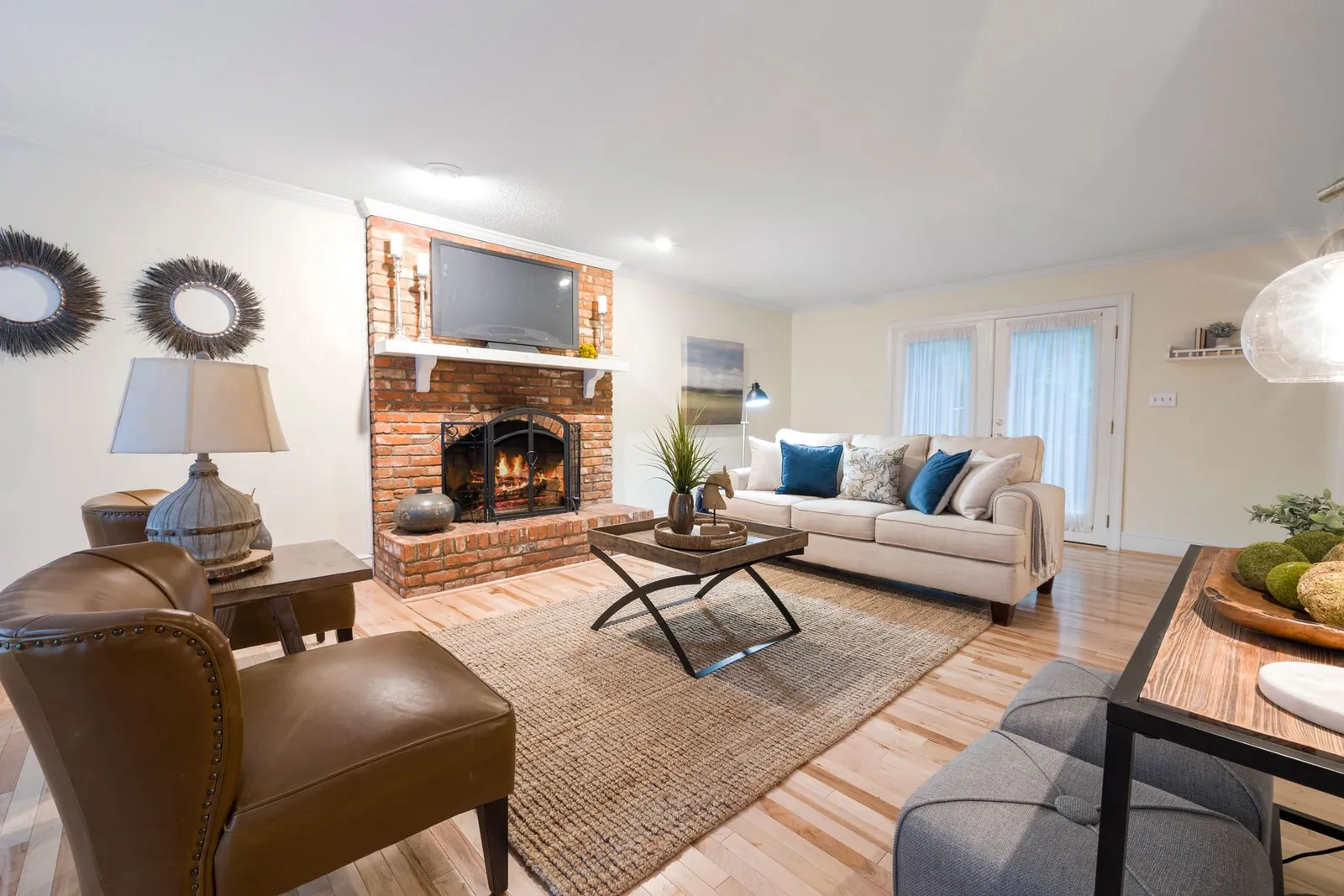
Damper Repair for Fireplaces That Will Not Open or Close
A damper that sticks open wastes heat all winter. One that sticks shut fills the room with smoke. Most throat damper repairs in New Jersey run $150 to $450.
The damper is the metal plate just above the fireplace opening that you open before a fire and close after. In most older New Jersey fireplaces it is cast iron, and it lives in the worst spot in the chimney: right where rain dripping down an uncapped flue lands. Given enough wet winters, the iron scales, the pivot freezes, the handle breaks off, or the frame twists until the plate no longer sits flat.
A damper that will not close is an open window up the chimney all winter, pulling warm air out of the house. One that will not open is a smoke problem the moment someone lights a fire. Both are usually simple to fix, and both often point to a missing cap, which is why we look at the top of the chimney as well as the bottom.
Signs you need this
- The handle or chain will not move
- You feel cold air falling out of the fireplace
- Rust flakes on the hearth or firebox floor
- Smoke rolls into the room even with the damper open
- Light shows around the edges of a closed damper
How we do it
- Look at both endsAt the free inspection we work the damper, look up past it and check the cap, because rain from above is the usual reason it failed.
- Free it or rebuild itSeized hinges are freed and lubricated with high-heat products, and broken handles, pins and chains are replaced.
- Reset the sealWarped plates and frames are straightened or replaced so the damper closes evenly against its seat.
- Or move it to the topIf the throat damper is beyond repair, a top-sealing damper on the crown replaces it, priced at the inspection.
Repair the old damper or switch to a top-sealing one?
If the cast-iron plate and frame are sound, repair is the cheaper path, typically $150 to $450. When the frame itself is rotted or cracked, moving the damper to the top of the flue usually makes more sense. It mounts on top of the flue, opens and closes by a cable that runs down into the firebox, and seals with a gasket.
Because it sits on top, a top-sealing damper also keeps rain and animals out when it is closed, and the warm air in the house stays below the whole flue instead of just the throat. Its price depends on the flue size and is written down at the free inspection.
What about the damper on a fireplace with gas logs?
Vented gas logs in a wood fireplace send their exhaust up the chimney, so the damper can never be fully shut while they are in place. Log manufacturers' instructions typically call for a damper stop or clamp that holds it partly open. If someone has removed that clamp, or closes the damper while the pilot is lit, combustion gases can come into the room.
New Jersey requires carbon monoxide alarms in homes with fuel-burning appliances, and the state's DCA Bulletin 99-3 treats a gas fireplace as one. If you have gas logs and no CO alarm near the bedrooms, fix that first.
Does a stuck damper mean the chimney needs other work?
Often it is the first symptom. Rust on the damper means water is reaching it. That water is also wetting the smoke chamber, the firebox and the flue tiles. We check those areas at the same visit so you do not fix the damper and miss the leak that ruined it.
FAQ
Damper Repair questions
How much does damper repair cost in New Jersey?
Fixing the existing throat damper usually costs $150 to $450. For a top-mount damper, the flue size and crown shape set the price, so we write it down at the free inspection.
Can I use the fireplace with a broken damper?
Stuck open, it will still draft, though warm air drains up the flue on every idle day. If it is stuck shut or partly shut, do not light a fire until it is fixed.
Should a gas fireplace damper be closed?
Not on a fireplace with vented gas logs. Those need the damper held partly open by a stop or clamp. Sealed direct-vent gas fireplaces and inserts do not use the old damper.
Will a top-sealing damper lower my heating bill?
It seals better than a cast-iron throat damper, so less warm air escapes on nights without a fire. How much it saves depends on the house and how often the fireplace sits idle.
How long does damper repair take?
Most repairs take one to two hours during your 3-hour appointment window. A top-sealing damper install usually fits in the same visit.
Related
Liners, caps, dampers and fireboxes
Book online
Pick a day. We'll bring a ladder.
Free inspection in a 3-hour window: 8 to 11, 11 to 2, or 2 to 5. We call to confirm before we arrive.